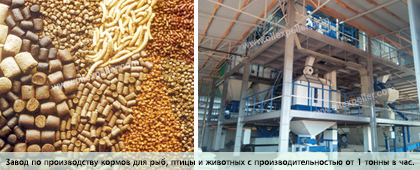
Мы являемся ведущей компанией в области проектирования, производства и установки комбикормовых заводов горизонтального и вертикального типа, включая заводы по производству кормов для животных, крупного рогатого скота, птицы / кур, рыбы и свиней. Наши установки отличаются простой конструкцией, удобством в эксплуатации и обслуживании, высокой надёжностью, компактными размерами и небольшим весом.
Решения по переработке кормов, которые мы можем предложить:
GOYUM предлагает проекты по производству кормов «под ключ», включая проектирование, изготовление оборудования, монтаж и пусконаладку комбикормового завода, а также обучение персонала управлению электрическими системами, эксплуатации оборудования и технологиям переработки кормов.
Наши комбикормовые заводы имеют модульную конструкцию и разрабатываются с учётом различных требований к кормам и индивидуальных потребностей клиентов. Благодаря инновационному оборудованию и глубоким знаниям технологических процессов, наши решения являются оптимальным выбором для производителей кормов, позволяя выпускать высококачественные и безопасные корма с максимальной эффективностью.
Технология, используемая в наших комбикормовых установках, обеспечивает производство кормов для животных в соответствии с самыми строгими санитарно-гигиеническими требованиями и одновременно минимизирует риск перекрёстного загрязнения.
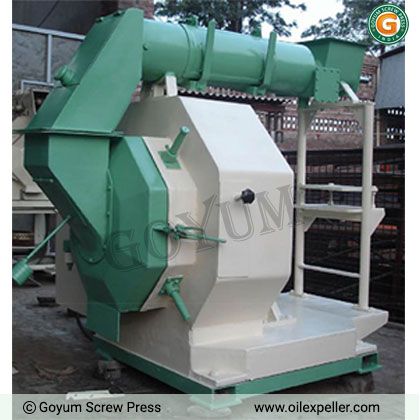
Мы предлагаем нашим клиентам высокоточный вертикальный комбикормовый завод, изготовленный из высококачественной низколегированной стали (MS / Alloy Steel), с возможностью индивидуального изготовления в соответствии с конкретными требованиями заказчика.

Вертикальный гранулятор
- Производительность от 1 до 10 тонн в час.
- Доступные модели от 24 до 125 л.с.
- Корпус из сварной стали.
- Импортные подшипники.
- Для производства кормов для птицы и животных.
- Высокоточный привод червячного колеса.
- Низкий уровень шума и вибрации.
- Паровая рубашка из нержавеющей стали обеспечивает однородное кондиционирование.
- Высокоточный зубчатый / ременной привод.
- Низкие затраты на обслуживание.
Технические характеристики вертикального комбикормового завода
| Модель | Мощность | A | B | C | D |
|---|
| GSP 16 | 24 л.с. | 1010 мм | 795 мм | 590 мм | 415 мм |
| GSP 20 | 50 л.с. | 1105 мм | 930 мм | 720 мм | 510 мм |
| GSP 24 | 80 л.с. | 1350 мм | 1030 мм | 860 мм | 608 мм |
| GSP 26 | 100 л.с. | 1380 мм | 1030 мм | 860 мм | 608 мм |
| GSP 30 | 125 л.с. | 1410 мм | 1030 мм | 860 мм | 608 мм |
Размеры приведены только для справки и могут быть изменены без предварительного уведомления.
Горизонтальный комбикормовый завод
Мы предлагаем нашим клиентам высокоточный горизонтальный комбикормовый завод, изготовленный из высококачественной низколегированной стали (MS / Alloy Steel), с возможностью индивидуального изготовления в соответствии с конкретными требованиями заказчика.

Горизонтальный гранулятор
- Производительность от 1 до 10 тонн в час.
- Доступные модели от 24 до 125 л.с.
- Корпус из сварной стали.
- Импортные подшипники.
- Для производства кормов для птицы и животных.
- Высокоточный привод червячного колеса.
- Низкий уровень шума и вибрации.
- Паровая рубашка из нержавеющей стали обеспечивает однородное кондиционирование.
- Высокоточный зубчатый / ременной привод.
- Низкие затраты на обслуживание.
Технические характеристики горизонтального комбикормового завода
| Модель | Мощность | A | B | C | D |
|---|
| GSP 16 | 24 л.с. | 1010 мм | 795 мм | 590 мм | 415 мм |
| GSP 20 | 50 л.с. | 1105 мм | 930 мм | 720 мм | 510 мм |
| GSP 24 | 80 л.с. | 1350 мм | 1030 мм | 860 мм | 608 мм |
| GSP 26 | 100 л.с. | 1380 мм | 1030 мм | 860 мм | 608 мм |
| GSP 30 | 125 л.с. | 1410 мм | 1030 мм | 860 мм | 608 мм |
Размеры приведены только для справки и могут быть изменены без предварительного уведомления.
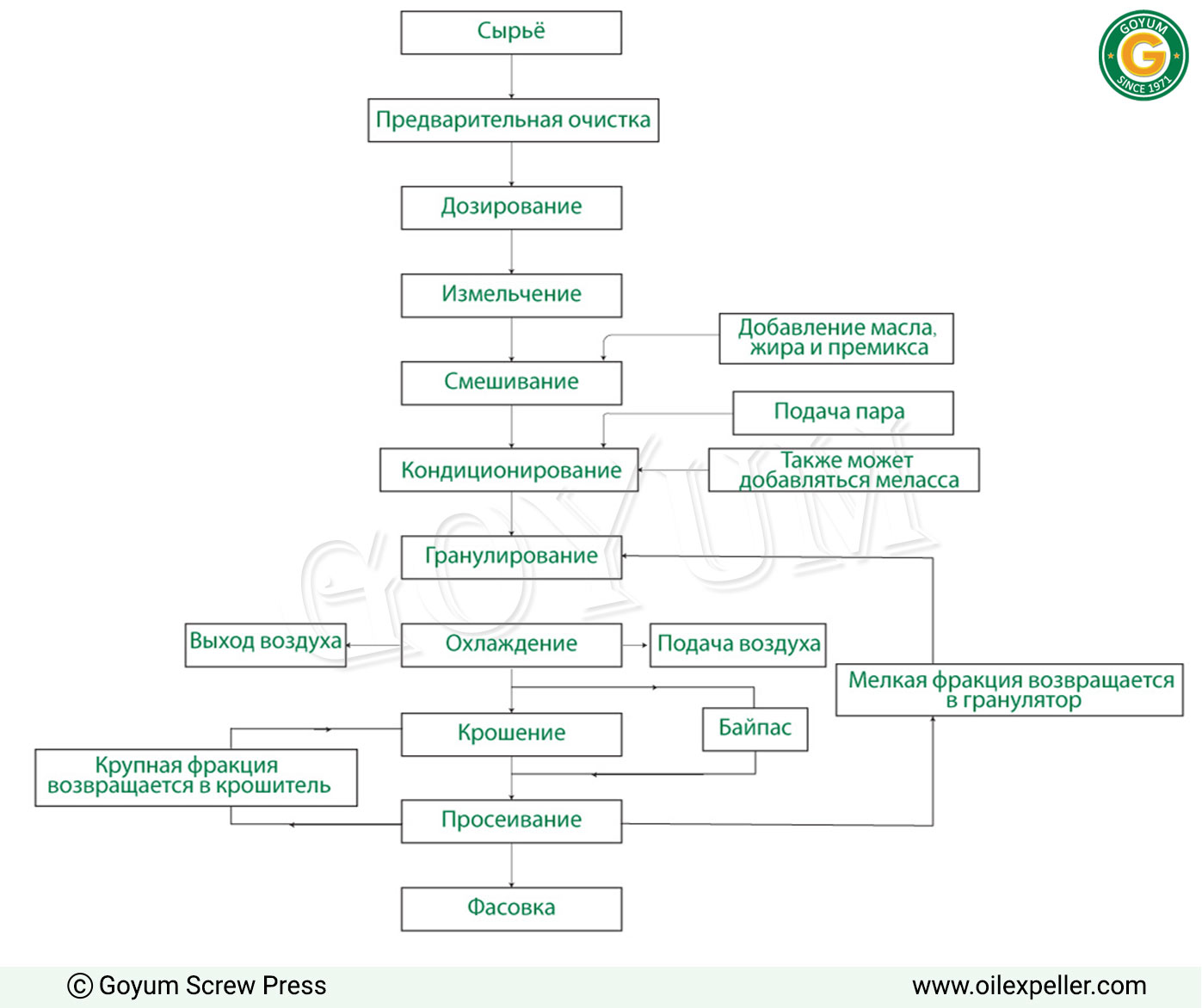
Технологическая схема завода по производству кормов для рыбы, птицы / кур и животных / крупного рогатого скота
Процесс комбикормового завода
Первым этапом гранулирования является транспортировка сырья из силоса для сыпучих материалов в дозирующую емкость. Важно удалить крупные посторонние примеси и металлические включения. Несоблюдение этого требования может нарушить работу дозирующего устройства или последующих заслонок, гравитационных / шнековых питателей.
Машины предварительной очистки обычно включают роторные сита, устройства для удаления джутовых волокон, магнитные улавливатели и другое оборудование. Для автоматизированных систем желательно проектировать систему таким образом, чтобы обеспечивалась непрерывная и эффективная очистка при максимальной производительности потока компонентов.
В современных системах автоматическое взвешивание различных ингредиентов в соответствии с рецептурой партии называется дозированием.
Этот этап включает следующее:
- Силос соответствующей емкости в зависимости от общей производительности системы.
- Гравитационный или шнековый питатель для регулирования и выгрузки материала в расположенный ниже весовой бункер.
Обычно устанавливаются два комплекта силосов. Один предназначен для основного компонента, а другой — для второстепенного компонента.
Оба весовых бункера разгружаются через общее соединение для дальнейшей обработки, а на некоторые или все бункеры устанавливается вибратор или встряхивающее устройство.
Взвешивание осуществляется электронной системой управления на базе ПЛК или микропроцессора. Управление выполняется с помощью компьютера.
Компьютер контролирует и регистрирует все параметры партии, фиксирует отклонения веса ингредиентов от заданного значения в большую или меньшую сторону, а также формирует отчеты по каждой партии, смене, дню, неделе и месяцу.
Желаемые свойства системы дозирования:
- Для обеспечения производительности предприятия необходимо выполнять точное взвешивание в установленное время.
- Система должна быть очень надежной и работать автоматически, при этом должна сохраняться возможность ручного управления в случае сбоя автоматического режима. Также необходимо обеспечивать прохождение материала при засорении бункера.
Измельчение выполняется для уменьшения размера материала до требуемой тонкости, чтобы обеспечить максимальную площадь поверхности, подвергаемой воздействию тепла и влаги, с целью достижения желатинизации в кондиционере.
Возможность измельчения с минимальным потреблением энергии не только снижает затраты на дробление, но и экономит энергию, необходимую для гранулирования.
Эффективное смешивание микро-компонентов по всей партии является важным условием для производства высококачественного корма.
Конструктивные особенности хорошей системы смешивания:
- Смешивание должно выполняться таким образом, чтобы достигался минимальный коэффициент вариации за минимальное время.
- Механизм разгрузки смесителя должен быть направлен на минимизацию остатков в барабане и предотвращение утечек через затворный клапан, чтобы избежать переноса материала в следующую партию.
Кондиционирование выполняется для добавления тепла и влаги в комбикорм с целью достижения желатинизации и облегчения гранулирования продукта.
Идеальная система кондиционирования должна обеспечивать следующее:
- Повышение температуры и влажности продукта.
- Наличие возможности как прямого, так и косвенного нагрева.
После кондиционирования ролик используется для подачи продукта через матрицу гранулятора, чтобы преобразовать порошкообразный материал в гранулы.
Качество и производительность гранулятора зависят от многих параметров, включая:
- Качество измельчения
- Состав кондиционированного корма: (соотношение масла, белка, клетчатки и т. д.)
- Состав матрицы
Горячие гранулы, выходящие из гранулятора, необходимо немедленно охлаждать для удаления влаги и тепла. Как правило, для этого используется противоточный охладитель.
Желаемые характеристики эффективного охладителя:
- Он должен обеспечивать удаление избыточного тепла и влаги из гранул, а также увеличивать срок хранения продукции.
- Кроме того, охлаждение должно быть равномерным со всех сторон.
Крошение — это процесс дробления гранул после охлаждения, чтобы сделать их пригодными для маленьких цыплят.
Если в этом нет необходимости, данный этап можно пропустить и выгружать продукт через боковую часть крошильного ролика.
Хорошо спроектированный крошитель должен обладать следующими свойствами:
- Обеспечивать получение крошки равномерного размера.
- Обеспечивать выгрузку материала с обеих сторон крошильного ролика.
- Иметь надежный механизм регулировки зазора.
Продукты, выходящие после крошения, представляют собой либо гранулы (если крошение завершено), либо крошку.
Их необходимо просеивать для удаления мелких частиц и отходов.
Однодековые рассевы используются только для удаления мелких фракций, а двухдековые — для удаления как мелких, так и крупных частиц.
Нераздробленные частицы и отходы возвращаются в крошитель, а гранулы направляются обратно на линию гранулирования для повторной обработки.
Просеивающая машина должна обладать следующими характеристиками:
- Обеспечивать удаление необходимого процента мелких фракций из продукта.
- Предотвращать частое засорение сит.
- Обеспечивать быструю и удобную замену сит с требуемым размером ячеек.
После просеивания готовый продукт упаковывается в мешки. Для небольших и средних предприятий упаковка может выполняться вручную, однако для повышения производительности рекомендуется использовать электронную упаковочную машину.
Вы хотите запустить новый комбикормовый завод для рыбы, птицы / кур или животных либо расширить существующее производство?
Комбикормовый завод, предлагаемый компанией GOYUM, отличается прочностью, универсальностью, надежностью и высокой эффективностью. Данный комбикормовый завод основан на практически проверенной технологии, которая не только энергоэффективна и экологически безопасна, но и экономически выгодна.